From The Lead at the Episcopal Café:
The GAFCON leadership has a list of eight people who are not welcome to observe the proceedings under any circumstances. The list includes Colorado Bishop Robert O’Neill, Nigerian gay activist Davis MacIyalla, Louie Crew, Rev Colin Coward, Susan Russell, Scott Gunn and Deborah and Robert Edmunds.
If you would like to join the ranks of those who wish to be banned from GAFCON, go to the I Want To Be Banned By GAFCON, Too! website. You will need to sign up at Facebook, if you are not already.
Monday, June 23, 2008


From The Anglican Bishop Of Jerusalem
Pluralist Speaks says:
"Well, The Suheil Dawani, Anglican Bishop in Jerusalem, at Saint George's Anglican Cathedral, Jerusalem, had some phrases worth listing in his sermon for the GAFCON leaders; the best potential one-liner I put first:"
*Pilgrims here do not bring decisions with them.
"And here are the others:"
* The greatest gift that Anglicanism has offered to the Middle East is a ministry of reconciliation
* we are a voice of moderation in a region of turmoil
* We work with humility and in a spirit of servanthood
* build and strengthen relationships among Christians, Moslems, and Jews and to work together with other Christian bodies here
* We are a people who know what it is to live faithfully and with humility in a pluralistic society
* we work for peace and unity
* Our work here is the very presence of Christ among the needy, offered without differentiation based on religion, gender, or nationality
* a crucial network of bridges on the international scene
* grateful for our relationships across the breadth of the Anglican Communion
* we have the utmost respect for the Archbishop of Canterbury
* I look forward to the Lambeth Conference
* Throughout its history, the Lambeth Conference has dealt with many difficult issues. At times these issues looked as if they might divide us, but they did not because we persevered in prayer and fellowship, together, with respect and patience
* The very stones of this holy city of Jerusalem teach us patience and humility
* God will always surprise us
* I pray that as you meet in this holy place, you will all be open, in real humility, to the Spirit's guidance and that you will continue here in a spirit of peace, reconciliation and goodwill
* I pray God's blessing on you, on the Archbishop of Canterbury and on our Anglican Communion
"Let's see if any of his words have an impact on the Global Anglican Future Conference."
If only the bishop's words would have an impact, but I doubt that the GAFCON leaders will take them to heart. Of course, I could be wrong. Let us pray.
Tip from Doorman-Priest, who would not give us a link. I am kinder than he, in that I linked to his blog in giving him credit.
"Well, The Suheil Dawani, Anglican Bishop in Jerusalem, at Saint George's Anglican Cathedral, Jerusalem, had some phrases worth listing in his sermon for the GAFCON leaders; the best potential one-liner I put first:"
*Pilgrims here do not bring decisions with them.
"And here are the others:"
* The greatest gift that Anglicanism has offered to the Middle East is a ministry of reconciliation
* we are a voice of moderation in a region of turmoil
* We work with humility and in a spirit of servanthood
* build and strengthen relationships among Christians, Moslems, and Jews and to work together with other Christian bodies here
* We are a people who know what it is to live faithfully and with humility in a pluralistic society
* we work for peace and unity
* Our work here is the very presence of Christ among the needy, offered without differentiation based on religion, gender, or nationality
* a crucial network of bridges on the international scene
* grateful for our relationships across the breadth of the Anglican Communion
* we have the utmost respect for the Archbishop of Canterbury
* I look forward to the Lambeth Conference
* Throughout its history, the Lambeth Conference has dealt with many difficult issues. At times these issues looked as if they might divide us, but they did not because we persevered in prayer and fellowship, together, with respect and patience
* The very stones of this holy city of Jerusalem teach us patience and humility
* God will always surprise us
* I pray that as you meet in this holy place, you will all be open, in real humility, to the Spirit's guidance and that you will continue here in a spirit of peace, reconciliation and goodwill
* I pray God's blessing on you, on the Archbishop of Canterbury and on our Anglican Communion
"Let's see if any of his words have an impact on the Global Anglican Future Conference."
If only the bishop's words would have an impact, but I doubt that the GAFCON leaders will take them to heart. Of course, I could be wrong. Let us pray.
Tip from Doorman-Priest, who would not give us a link. I am kinder than he, in that I linked to his blog in giving him credit.
Sunday, June 22, 2008
Archbishop Peter Akinola's Speech
Archbishop Peter Akinola's speech is posted at GAFCON's official website, if you care to read it. I could not get through all of it. Reading Bp. Duncan's 14 page speech and writing about it took a lot out of me, which is probably why all I'm good for today is watching movies.
I'm warning you: if I hear one more time about how the Episcopal Church has "torn the fabric" of the Anglican Communion, I will SCREEEAM!
Lapin sent me a link to the speech earlier from Stand Limp, but I do not want to link to them on my blog. It could attract the wrong type here - if you know what I mean.
I'm warning you: if I hear one more time about how the Episcopal Church has "torn the fabric" of the Anglican Communion, I will SCREEEAM!
Lapin sent me a link to the speech earlier from Stand Limp, but I do not want to link to them on my blog. It could attract the wrong type here - if you know what I mean.
Movietime!

I'm hibernating with movies. I just finished watching "DreamGirls". I know I'm late to that party, but I'm glad I didn't miss it altogether. Wow! Jennifer Hudson was spectacular in both her singing and acting! Beyoncé was very good as was Eddie Murphy's over-the-top performance. Oh, and I liked the music too. How would I characterize the music? Broadway soul? Broadway Motown? I probably have that wrong.
The movie gives a glimpse of the dark side of the music business, the pay-offs to the DJs to play the records, betrayals, etc. We see how men tend to do women wrong, but the women are strong, and they don't stay down. They come back stronger than ever. Am I right about that? Yes!
But I gotta tell you the truth. In the second half, the movie was a little slow in spots, and I took to filing my fingernails, but all in all, it's definitely worth watching.
Earlier in the week, I watched "Becoming Jane", supposedly based on the life of Jane Austen. I'd say, "Don't bother," for that one. I don't have in depth knowledge about a whole hell of things in this world, but Jane Austen, her writing and her life, I know. The movie takes great liberties with her biography - silly liberties. They don't even make the story better.
Grandpère is out of town, so I can do what I want. Yay! I'm heading over to rent a couple more movies. I'm in the mood for movies!
And that's all I got, peeps. I'm laaazy today. I don't even have a thought for the day. It's my day off from thinking.
Oh. I did go to church. Just so you know.
Saturday, June 21, 2008
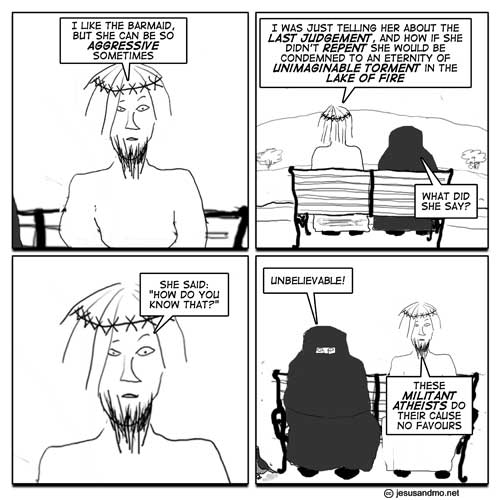
Bishop Duncan's Speech At GAFCON
Since I waded through all 14 pages of Bishop Robert Duncan's opening address to GAFCON (Global Anglican Future Conference), which is - what? - the anti-Lambeth, the alternative Lambeth, I decided to write a bit about it and probably bore you to death. One goal of the folks gathered at GAFCON seems to be to take Anglicanism back to a nebulous gilded age when the one true church of Jesus Christ manifested itself plainly for all to see. Bishop Duncan mentions the church of the early centuries of Christianity but then suggests that the shared prayer of Anglicanism today should be a version of the 1662 Book of Common Prayer.
The groups represented at GAFCON are: Network, Anglican Mission in America, Reformed Episcopal Church, American Anglican Council, Forward in Faith North America, Anglican Province in America, congregations in Kenya, Uganda, and the Southern Cone, Anglican Network in Canada, and Federation of Anglican Churches in America. One major "challenge" facing the group as they come together is that they do not agree on the ordination of women to the priesthood. Other "challenges" may arise as they continue to seek to come together in a body.
One question from Bishop Duncan startled me. He asked, "What will it take to restore the Holy Scripture as "ultimate rule and standard" among us?" Ultimate rule and standard? That seems a tad, just a tad idolatrous to me. Of course, I could be wrong, since I am neither a learned theologian nor a learned Scripture scholar. "Anglicans are 'under the Word'," says Bp. Duncan. The Word made flesh or the word in a book?
He speaks of the proper role of the Anglican Communion as a bridge between the Roman Catholic and Orthodox Churches on one side and the Protestant churches on the other. One way that he sees the Episcopal Church and the Anglican Church of Canada going astray is that they are rather trying to be a bridge between the church and the world. I wonder if the doctrine of the Incarnation could have implications here.
Bishop Duncan says, "But the inexorable shift of power from Britain and the West to the Global South cannot be stopped, and some conciliar instrument reflective of the shift is bound to emerge as the Reformation Settlement gives way to a Global (post-colonial) Settlement." That statement led me, along with others, to ponder why a white man is moderator of the gathering.
I think that's enough.
The groups represented at GAFCON are: Network, Anglican Mission in America, Reformed Episcopal Church, American Anglican Council, Forward in Faith North America, Anglican Province in America, congregations in Kenya, Uganda, and the Southern Cone, Anglican Network in Canada, and Federation of Anglican Churches in America. One major "challenge" facing the group as they come together is that they do not agree on the ordination of women to the priesthood. Other "challenges" may arise as they continue to seek to come together in a body.
One question from Bishop Duncan startled me. He asked, "What will it take to restore the Holy Scripture as "ultimate rule and standard" among us?" Ultimate rule and standard? That seems a tad, just a tad idolatrous to me. Of course, I could be wrong, since I am neither a learned theologian nor a learned Scripture scholar. "Anglicans are 'under the Word'," says Bp. Duncan. The Word made flesh or the word in a book?
He speaks of the proper role of the Anglican Communion as a bridge between the Roman Catholic and Orthodox Churches on one side and the Protestant churches on the other. One way that he sees the Episcopal Church and the Anglican Church of Canada going astray is that they are rather trying to be a bridge between the church and the world. I wonder if the doctrine of the Incarnation could have implications here.
Bishop Duncan says, "But the inexorable shift of power from Britain and the West to the Global South cannot be stopped, and some conciliar instrument reflective of the shift is bound to emerge as the Reformation Settlement gives way to a Global (post-colonial) Settlement." That statement led me, along with others, to ponder why a white man is moderator of the gathering.
I think that's enough.
Friday, June 20, 2008

Feet Of Clay
From a funny-but-serious short memoir by George Saunders in the New Yorker:
On those Wednesday afternoons when I was Reader for all-school Mass, I would leave class early, confident yet stressed, like a little businessman, and hustle down to the sacristy, where I’d read the Epistle passage aloud so that Father X could check my pronunciation. He’d mark the reading with one of several silk ribbons bound into the pages, and I’d take the book out to the lectern and stand there a minute, thinking, Soon I’ll be up here, and the light will be on me, and the church will be full of my friends.
Normally on Wednesdays I found Father X working at something in the sacristy. This Wednesday, I came up the aisle quietly, so quietly that I discovered Father X and a nun I’ll call Sister Y in the middle of—well, I couldn’t figure out what they were doing. It appeared to be some particularly athletic form of kissing, involving tongues and a lot of snakelike extraneous limb and torso motion, as if this new kind of kissing were filling them with painful electricity.
Later, Saunders went back to the church to do his practice reading, careful to make a good deal of noise as he walked down the aisle.
Out came Sister Y, looking beautiful in the way someone will when she has just, against all sense, done exactly what she most wanted to.
Saunders awakened to the truth that nuns and priests are human beings, like the rest of us, with feet of clay, at an earlier age than I did. I was well into my late teen years before I was disabused of the notion that Roman Catholic priests and nuns were far above us lowly lay folks on the holiness scale. At my Jesuit university, one of my philosophy professors was an elderly priest who was an outspoken racist. He did not mince words in his racist remarks. However, he was very much the exception, in fact, the only exception amongst the Jesuits at that time, 50-plus years ago, for it was at the university that I began to unlearn the racist attitudes I had lived with my whole life. He had been a brilliant philosophy teacher in his prime, or so I heard, but when he taught me, he was way, way, way past his prime.
After graduating from the university, I taught second grade at a Roman Catholic school, one of a small group of lay teachers amongst the nuns who outnumbered us. After my first year there, the nuns treated me more like one of them and began to share news and harmless gossip about life in the convent. I was thunderstruck one day when one of the sisters made a not-so-harmless snide remark about one of the other nuns. The comment implied that the nuns did not always get along with one another! I have suggested before that I stayed an innocent naïf far longer than most young people - you could even say a case of arrested development, but there it is. As time went on, others shared with me the normal tensions involved in living in community. Of course, that's quite usual and natural, and I should have known better than to think all was sweetness and light in the relationships of the nuns one to the other in convent life, but I did not.
Lest you think that goodness went along with my innocence, I'll disabuse you of that notion, because my small circle of friends came close to what would be called "mean girls" today, for we used cutting irony and ridicule when we talked of certain of our peers. The good news is that it was mostly talk for we did not treat them rudely, plus we were not the top group in popularity, so we had little influence beyond our small circle.
UPDATE: From Fran in the comments:
By Thomas Merton
To love another as a person we must begin by granting him his own autonomy and identity as a person. We have to love him for what he is in himself, and not for what he is to us. We have to love him for his own good, not for the good we get out of him. And this is impossible unless we are capable of a love which ‘transforms’ us, so to speak, into the other person, making us able to see things as he sees them, love what he loves, experience the deeper realities of his own life as if they were our own. Without sacrifice, such a transformation is utterly impossible. But unless we are capable of this kind of transformation ‘into the other’ while remaining ourselves, we are not yet capable of a fully human existence.
On those Wednesday afternoons when I was Reader for all-school Mass, I would leave class early, confident yet stressed, like a little businessman, and hustle down to the sacristy, where I’d read the Epistle passage aloud so that Father X could check my pronunciation. He’d mark the reading with one of several silk ribbons bound into the pages, and I’d take the book out to the lectern and stand there a minute, thinking, Soon I’ll be up here, and the light will be on me, and the church will be full of my friends.
Normally on Wednesdays I found Father X working at something in the sacristy. This Wednesday, I came up the aisle quietly, so quietly that I discovered Father X and a nun I’ll call Sister Y in the middle of—well, I couldn’t figure out what they were doing. It appeared to be some particularly athletic form of kissing, involving tongues and a lot of snakelike extraneous limb and torso motion, as if this new kind of kissing were filling them with painful electricity.
Later, Saunders went back to the church to do his practice reading, careful to make a good deal of noise as he walked down the aisle.
Out came Sister Y, looking beautiful in the way someone will when she has just, against all sense, done exactly what she most wanted to.
Saunders awakened to the truth that nuns and priests are human beings, like the rest of us, with feet of clay, at an earlier age than I did. I was well into my late teen years before I was disabused of the notion that Roman Catholic priests and nuns were far above us lowly lay folks on the holiness scale. At my Jesuit university, one of my philosophy professors was an elderly priest who was an outspoken racist. He did not mince words in his racist remarks. However, he was very much the exception, in fact, the only exception amongst the Jesuits at that time, 50-plus years ago, for it was at the university that I began to unlearn the racist attitudes I had lived with my whole life. He had been a brilliant philosophy teacher in his prime, or so I heard, but when he taught me, he was way, way, way past his prime.
After graduating from the university, I taught second grade at a Roman Catholic school, one of a small group of lay teachers amongst the nuns who outnumbered us. After my first year there, the nuns treated me more like one of them and began to share news and harmless gossip about life in the convent. I was thunderstruck one day when one of the sisters made a not-so-harmless snide remark about one of the other nuns. The comment implied that the nuns did not always get along with one another! I have suggested before that I stayed an innocent naïf far longer than most young people - you could even say a case of arrested development, but there it is. As time went on, others shared with me the normal tensions involved in living in community. Of course, that's quite usual and natural, and I should have known better than to think all was sweetness and light in the relationships of the nuns one to the other in convent life, but I did not.
Lest you think that goodness went along with my innocence, I'll disabuse you of that notion, because my small circle of friends came close to what would be called "mean girls" today, for we used cutting irony and ridicule when we talked of certain of our peers. The good news is that it was mostly talk for we did not treat them rudely, plus we were not the top group in popularity, so we had little influence beyond our small circle.
UPDATE: From Fran in the comments:
By Thomas Merton
To love another as a person we must begin by granting him his own autonomy and identity as a person. We have to love him for what he is in himself, and not for what he is to us. We have to love him for his own good, not for the good we get out of him. And this is impossible unless we are capable of a love which ‘transforms’ us, so to speak, into the other person, making us able to see things as he sees them, love what he loves, experience the deeper realities of his own life as if they were our own. Without sacrifice, such a transformation is utterly impossible. But unless we are capable of this kind of transformation ‘into the other’ while remaining ourselves, we are not yet capable of a fully human existence.
Thursday, June 19, 2008
Pink Snow

The crepe myrtle tree is on the side of our house. I don't know the name of the variety, but we call it pink snow because that's what it looks like with the tree and the ground covered with pink flowers. The flowers in the lower right hand corner are pentas for the hummingbirds and butterflies.
Just thought you'd like to see something pretty for a change.
Please Guys, Give Them Back
From the Times-Picayune:
BATON ROUGE -- Gov. Bobby Jindal urged lawmakers Wednesday to reverse enactment of a raise that would double their pay by taking immediate legislative action before the current session ends in five days.
But with Jindal repeating a pledge not to veto the measure, lawmakers said they considered the issue closed.
"I don't know why he is trying to antagonize the Legislature," House Speaker Jim Tucker, R-Algiers, said of Jindal's request.
OK, someone please explain this to me. Our guv is asking the legislators to reverse the bill that they passed to more than double their salaries. The guv has something called veto power, which he is not willing to exercise. He has antagonized the legislators by his request for reversal of the bill, but he will not veto the bill and please many, many, many other citizens of Louisiana. He won't sign the bill, but if he does not veto by July 8, the bill will become law.
He now seems to be in the position of pleasing no one. Perhaps, he thinks that as long as the lawmakers get their money, they will forget that he antagonized them. Perhaps he thinks the people of Louisiana will forget that he broke his campaign promise to "prohibit the legislature from giving themselves raises that take effect before the subsequent election." Jindal was a Rhodes Scholar, as was our Sen. David Vitter, who admitted to patronizing prostitutes. Having been a Rhodes Scholar does not seem to be a sure-fire predictor that one will serve well in a public office.
I am proud to say that my representative in the legislature, Dee Richard, voted against the pay raise and that he will refuse to take the raise, along with others in the legislature. Good for them. I can't say the same for my senator, Joel Chaisson.
BATON ROUGE -- Gov. Bobby Jindal urged lawmakers Wednesday to reverse enactment of a raise that would double their pay by taking immediate legislative action before the current session ends in five days.
But with Jindal repeating a pledge not to veto the measure, lawmakers said they considered the issue closed.
"I don't know why he is trying to antagonize the Legislature," House Speaker Jim Tucker, R-Algiers, said of Jindal's request.
OK, someone please explain this to me. Our guv is asking the legislators to reverse the bill that they passed to more than double their salaries. The guv has something called veto power, which he is not willing to exercise. He has antagonized the legislators by his request for reversal of the bill, but he will not veto the bill and please many, many, many other citizens of Louisiana. He won't sign the bill, but if he does not veto by July 8, the bill will become law.
He now seems to be in the position of pleasing no one. Perhaps, he thinks that as long as the lawmakers get their money, they will forget that he antagonized them. Perhaps he thinks the people of Louisiana will forget that he broke his campaign promise to "prohibit the legislature from giving themselves raises that take effect before the subsequent election." Jindal was a Rhodes Scholar, as was our Sen. David Vitter, who admitted to patronizing prostitutes. Having been a Rhodes Scholar does not seem to be a sure-fire predictor that one will serve well in a public office.
I am proud to say that my representative in the legislature, Dee Richard, voted against the pay raise and that he will refuse to take the raise, along with others in the legislature. Good for them. I can't say the same for my senator, Joel Chaisson.
Subscribe to:
Posts (Atom)