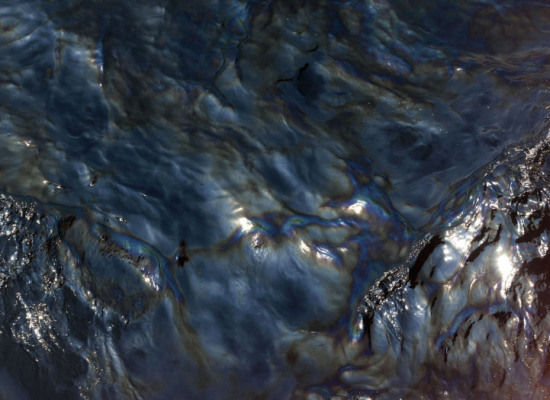
From Radio Netherlands:
While the world’s attention is focused on the growing oil slick from the Deepwater Horizon oil well in the Gulf of Mexico, there is an unseen environmental disaster taking place underwater. Invisible substances underneath are wreaking havoc on an enormous scale, just as much as the very visible black sludge above.
The well, 1,500 metres under the sea off the Louisiana coast, is responsible for a disaster the like of which has never been seen before. This is not because of the amount of oil pouring into the sea, 800,000 litres per day, says eco-toxicologist John Schobben from the Dutch Institute for Marine Resources and Ecosystem Studies (IMARES). The situation is unique because the oil is coming directly from the well and contains substances that have long been removed from the sort of oil leaked by tankers.
“What you normally see is fuel oil which floats on the water and mostly affects birds and mammals, but oil straight from the well contains substances like PAKs, the black smut you find on barbeques. They are carcinogenic and dissolve in water. You also get volatile substances like toluene and benzene which kill fish, plankton and mussels.”
Mississippi
The most important aspect of any oil disaster is the protection and clean-up of the coast. Mr Scobben is first to admit that the environmental damage to the land is many times greater than that suffered in the sea. The Mississippi delta is a valuable ecosystem involving both fresh and salt water life. Turtles come ashore to lay their eggs and the area is a hub for nesting birds. The timing of the disaster could not be worse, coming as it does in the middle of the brooding season.
Nevertheless, Mr Schobben maintains that the leak’s submarine damage is being underestimated. IMARES research shows that PAKs and volatile substances disturb the submarine eco-balance long-term. There only need be one species hit for others to be given the opportunity to move in. He calls this phenomenon ‘species shift’.
“You see an unnatural situation emerging. An area will never be completely dead. There will always be something left alive but it’s not a natural ecosystem anymore. That will eventually recover, but it takes a very long time.”
Before now, I have not seen reporting on the difference between oil that leaks from a tanker and oil spewing directly from a well and the vast difference in toxicity. Maybe it's out there, and I missed it. Even if the oil never reaches more land than at present, the disaster will be far greater than I ever imagined, and I've taken a pessimistic view from the beginning.
Thanks to JayV at Blazing Indiscretions for sending me the link.
Photo from The Huffington Post.