Walter Brueggemann - The Prophetic Imagination, 2d ed.Jeremiah and Second Isaiah taken together, poets of pathos and amazement, speak in laments and doxologies. They cannot be torn from each other. Reading Jeremiah alone leaves faith in death where God finally will not stay. And reading Second Isaiah alone leads us to imagine that we may receive comfort without tears and tearing. Clearly, only those who anguish will sing new songs.
Saturday, March 31, 2012
THOUGHT FOR THE DAY - WALTER BRUEGGEMANN


DIOCESE OF MANCHESTER REJECTS ANGLICAN COVENANT
From Paul at Not the Same Stream:
UPDATE: Percentages from Alan Perry:
Manchester Against
Bishops For: 1, Against: 2, Abstained: 0
Clergy For: 15, Against: 25, Abstained: - 0
Laity For: 12, Against: 23, Abstained: - 7
Summary
Dioceses for the Covenant to date: 15
Dioceses against the Covenant to date: 25
There are 4 dioceses yet to vote
Southwell and Nottingham 12 April (Thursday), Chichester on 21 April, Newcastle and York 28 April.
UPDATE: Percentages from Alan Perry:
With Manchester's figures, we now have:
Bishops: 77.4% for, 16.7% against, 6.0% abstentions
Clergy: 45.0% for, 50.9% against, 4.1% abstentions
Laity: 48.1% for, 47.0% against, 4.9% abstentions
Overall: 47.5% for, 48.0% against, 4.5% abstentions
Overall (clergy and laity only): 46.7% for, 48.8% against, 4.5%
abstentions
Friday, March 30, 2012
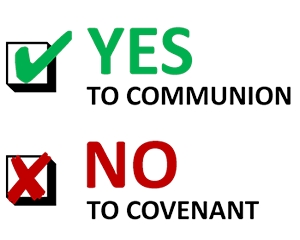
YES TO ANGLICAN COMMUNION
Commentary from the church press on the defeat of the Anglican Covenant in the Church of England.
 Giles Fraser in the Church Times:
 From the Church of Ireland Gazette:

Also from the Church Times:
And it appears that Archbishop Rowan has given up on trying to resuscitate the covenant in the Church of England.

H/T to Simon Sarmiento at Thinking Anglicans for the links and to MadPriest for the cartoon.

I WILL not disguise my joy at the death of the Anglican Covenant. And death it is — despite the fact that some people will inevitably try to give its corpse the kiss of life. The idea that the Church of England has given it so emphatic a thumbs-down, especially in the face of huge episcopal and archiepiscopal lobbying, is evidence of how unpopular the idea is in the pews.
Here, the majority of bishops have shown themselves to be completely out of touch with the centre of gravity of the Church of England. It is not that we do not care about our brothers and sisters in other parts of the Communion. It is simply that we want our Christian solidarity to be expressed through our Anglican heritage, our common baptism, and the development of friendships — and not through a treaty that can be haggled over by church politicians, the purpose of which was always to isolate those Churches that had a different view of sexual ethics.

The moral of the story has at least two dimensions. First, from a practical perspective, when faced with a divisive crisis, setting up a bureaucratic procedure that is going to take years to get anywhere, if it is to get anywhere at all, is hardly a good idea. If anyone thought that ‘buying time’ would allow the same-sex relationships imbroglio to subside, that was a very mistaken notion, and we in the Church of Ireland do need to take note of that as we face our own difficulties over the issue.That's our Lesley Crawley, Moderator of No Anglican Covenant Coalition, which is mentioned in the article.
Second, from a more conceptual perspective, we now know, as surely as we can know, that Anglicanism is set to remain a Communion of wholly autonomous Cchurches (sic), bound together by ‘bonds of affection’. It should be added, however, that such mutual affection is far from a weak ideal; it is, in fact, a considerable calling and it is surely true that at times we do have to work at loving one another. There has been talk about being in communion implying ‘interdependence’ and thus justifying central regulation, however light, but that interdependence argument is actually quite vague because everything in the world is interdependent and, from an ecclesiological perspective, all Christians of whatever denomination, in communion or out of communion, are interdependent. Thus, as Anglicans, we are all, across the globe, now challenged to ponder our affection for one another and, where it is waning, to seek to nurture it carefully and prayerfully.
Also from the Church Times:
Speaking on Monday, Dr Williams said: “This is, of course, a disappointing outcome for many of us in the Church of England and many more in the Communion. Unfortunately, the challenges the Covenant was meant to address will not go away just because people vote against it.Of course, we face challenges in the Communion, and we will have to work on relationships, just not through the vehicle of the covenant.
"We shall still have to work at vehicles for consultation and managing disagreement. And nothing should lessen the priority of sustaining relationships, especially with some of those smaller and vulnerable Churches for whom strong international links are so crucial.”
And it appears that Archbishop Rowan has given up on trying to resuscitate the covenant in the Church of England.

H/T to Simon Sarmiento at Thinking Anglicans for the links and to MadPriest for the cartoon.
Thursday, March 29, 2012
R. I. P. EARL SCRUGGS
"Foggy Mountain Breakdown"
Flatt and Scruggs in 1965, Grand Ole Opry (Ryman Auditorium).
Earl Scruggs plays Fireball Mail on one of the Martha White shows in the 60's.
I remember Lester Flatt and Earl Scruggs on the Grand Ole Oprey radio show and from their appearances on The Beverly Hillbillies show.
DIOCESE OF LONDON REJECTS ANGLICAN COVENANT
From Thinking Anglicans:
London diocesan synod voted on the Anglican Covenant motion this evening.Summary from Not the Same Stream:
The motion in favour of the covenant was lost, being defeated in both the houses of laity and clergy.
Bishops: 2 for / 1 against / 0 abstentions
Clergy: 17 for / 32 against / 1 abstention
Laity: 26 for / 33 against / 2 abstentions
These are the confirmed figures taken from the diocesan website, please ignore earlier incorrect results taken from a garbled tweet.
Dioceses for the Covenant to date: 15Dioceses against the Covenant to date: 24There are 5 dioceses yet to vote
MY TWO SENATORS - COMPARE AND CONTRAST
Who ya gonna believe? I know whom I believe. When you're ill or injured, the principle of oversized government is NOT your greatest concern.

Dear Friend,
Some things in life get better as time goes by. But today, on the two-year
anniversary of Obamacare, we can safely say that President Obama’s health care law is not one of
those things.
In fact, the ugly truth is that Obamacare has gotten worse and worse with
each passing week. You may recall that when the president and his liberal allies in Congress were forcing
the bill through over the objections of the American people, they made the odd claim that creating a
massive new entitlement would actually save us money.
Well, I and many others at the time said that was ludicrous, and we were
right. Once you add in all the implementation costs, which seem to be growing every day, the law will
spend $2.6 trillion over the first decade alone – something we certainly can’t afford with
a national debt that’s already at $15 trillion and counting.
And it hits families in Louisiana and across the country just as hard.
Even though President Obama promised to lower premiums by $2,500 per family, the Congressional Budget
Office estimates that premiums will actually increase by $2,100. Since the
President took office, premiums for employer-sponsored coverage have already risen by over $2,200 per
family.
I’ve had several town halls and telephone town halls across Louisiana
over the last two years, and I’ve yet to hear from a Louisianian whose health insurance has gotten
less expensive since Obamacare was signed into law. They tell me exactly the opposite – they’re
paying much more.
To make things worse, a recent study found that up to 35 million Americans
could lose their employer-sponsored health care under Obamacare, and Louisiana seniors are projected
to be the hardest hit Medicare beneficiaries in the country because of the bill’s Medicare Advantage
cuts. Our state also stands to be on the hook for an additional $7 billion thanks to the bill’s
unfunded Medicaid mandate.
Beyond all the practical reasons that Obamacare is a disaster, there’s
a matter of principle. The law further expands an already oversized government, creating over 159 new
boards, offices, and panels to concentrate even more control over health care decision-making into Washington
bureaucracy. The Obama administration has already cranked out over 12,000 pages of new regulations related
to Obamacare. And the individual mandate, which would require every American to purchase health insurance
or else pay a fine to the government, is plainly unconstitutional.
That’s why I introduced a bill at the beginning of this Congressional
session to fully repeal Obamacare, and it’s why I’m hopeful that as the Supreme Court takes
up Obamacare, they will decide once and for all that it violates the Constitution.
Rest assured that this fight is not over, because with each passing day,
it’s more and more obvious that Obamacare must be repealed. And rest assured that I’ll continue
leading that fight.
Sincerely,

David Vitter
United States Senator
--------------------------------------------------------------------------------------------------------------------------

Mary Landrieu (D)
Dear friend,
As we mark the second anniversary of the Affordable Care Act, Louisianians of all ages are benefitting from this historic law. Two years ago, the private insurance market was broken and unsustainable, and middle class families were losing coverage at an alarming rate. Something had to be done, and Congress acted.
In the state of Massachusetts, where the framework of this law has been in place for six years, more than 98 percent of the state’s residents are now insured, and the child insurance rate leads the nation at 99.8 percent coverage. From 2006 to 2009, premiums in the individual health insurance market rose by 14 percent nationally, but they fell by 40 percent in Massachusetts over the same period.
Despite the clear and convincing benefits of health reform, there is still a great deal of misinformation and political rhetoric surrounding the issue. However, as time goes on, the benefits of this law will become clearer and clearer, and the dangers of repeal will become even more apparent. Continue reading below for more statistics on how this law is benefitting Louisianians.
All the best,

How the Affordable Care Act is helping Louisiana
Seniors:
- 52,932 Louisiana seniors on Medicare received a 50 percent discount on their prescription drugs when they fell into the donut hole last year.
- Louisiana seniors saved an average of $571 per person, for a total savings of more than $30 million across the state. By 2020, the law will close the donut hole.
- Insurance companies can no longer charge women higher premiums based on only their gender.
- More than 275,000 Louisiana women can now also receive free mammograms, bone density scans and cervical cancer screenings without a co-pay.
- 45,000 Louisiana young adults have gained health coverage now that children may remain on their parents’ coverage until they turn 26.
- No child in Louisiana today can be denied coverage due to arbitrary lifetime dollar limits. To date, 385,000 Louisiana children have benefitted from this provision.
- 60,000 small businesses in Louisiana are eligible for tax credits to make employee coverage more affordable.
WHAT'S WRONG WITH THIS PICTURE?
Don't fail to read Counterlight's post titled "On the L Train". Something's very wrong for so very many in the US today. Far too many people amongst those who managed to hang on to their jobs work hard and still struggle from paycheck to paycheck to cover their expenses. That's not to even mention the plight of those who lost their jobs. Is this the American dream?
As I was pressed against a door on a crowded L train going into Manhattan one morning recently, a young well dressed couple within inches of me began discussing their rent, how to pay it this month, if they could get away with paying just part of it, what groceries they could do without to make the rent. They certainly did not look the part of poor struggling tenants. They looked like low level office professionals of some kind, maybe hipsters on the weekends. They were both on their way to work with their ID badges on. And yet they were talking about doing without to make the rent.
There are so many things wrong with this picture, I thought. Why should anyone who's employed have to worry about paying the rent? Why should 2 employed people worry about paying rent? Why are they, and all the rest of us, pressed together like cattle on the way to a slaughterhouse on a train that runs unreliably at best?
Wednesday, March 28, 2012
KING EDWARD VI PRAYER BOOK - 1549

From The Book of Common Prayer - 1549:
Although a formal break with the Papacy came about during the time of Henry VIII, the Church of England continued to use liturgies in Latin throughout his reign, just as it always had. However, once Henry died and the young Edward VI attained the throne in1547, the stage was set for some very significant changes in the religious life of the country. And so a consultation of bishops met and produced the first Book of Common Prayer. It is generally assumed that this book is largely the work of Archbishop Thomas Cranmer..., but, as no records of the development of the prayer book exist, this cannot be definitively determined.
This Book of Common Prayer was not created in a vacuum, but derives from several sources. First and foremost was the Sarum Rite, or the Latin liturgy developed in Salisbury in the thirteenth century, and widely used in England. Two other influences were a reformed Roman Breviary of the Spanish Cardinal Quiñones, and a book on doctrine and liturgy by Hermann von Wied, Archbishop of Cologne.This prayer book was in use only for three years, until the extensive revision of 1552. However, much of its tradition and language remains in the prayer books of today, as may be seen by even a cursory examination of the text.Our priest presided at the Eucharist in the east-facing tradition, with his back to us. As we read the words with the unfamiliar spellings, I had to suppress a giggle from time to time. The congregation said little more during the service than, "And with thy spirite," in response to, "The Lorde be with you." I'd attended east-facing liturgies before but never using the 1549 prayer book, and I thoroughly enjoyed the service. I wouldn't want to use the liturgy all the time, but it was a lovely experience.
Our priest-in-charge has been creative in the weekly Lenten services. Last week, we had a dinner Eucharist, in which we sat down to a regular meal in the middle of which the communion prayers were said and the elements passed around the dinner table.


Subscribe to:
Posts (Atom)